
One of the most common reasons people stop journaling is surprisingly simple: they run out of things to write about.
At the beginning, journaling feels exciting. You have ideas, reflections, and plenty of thoughts waiting to be written down. But after a few days or weeks, something strange happens. You sit down with your journal and your mind suddenly goes blank.
This is normal.
Your brain is used to reacting to life, not slowing down to examine it. Journaling asks your mind to pause and look inward, and that takes practice.
The good news is that you never actually run out of things to write about. Sometimes you just need a new way to start the conversation.
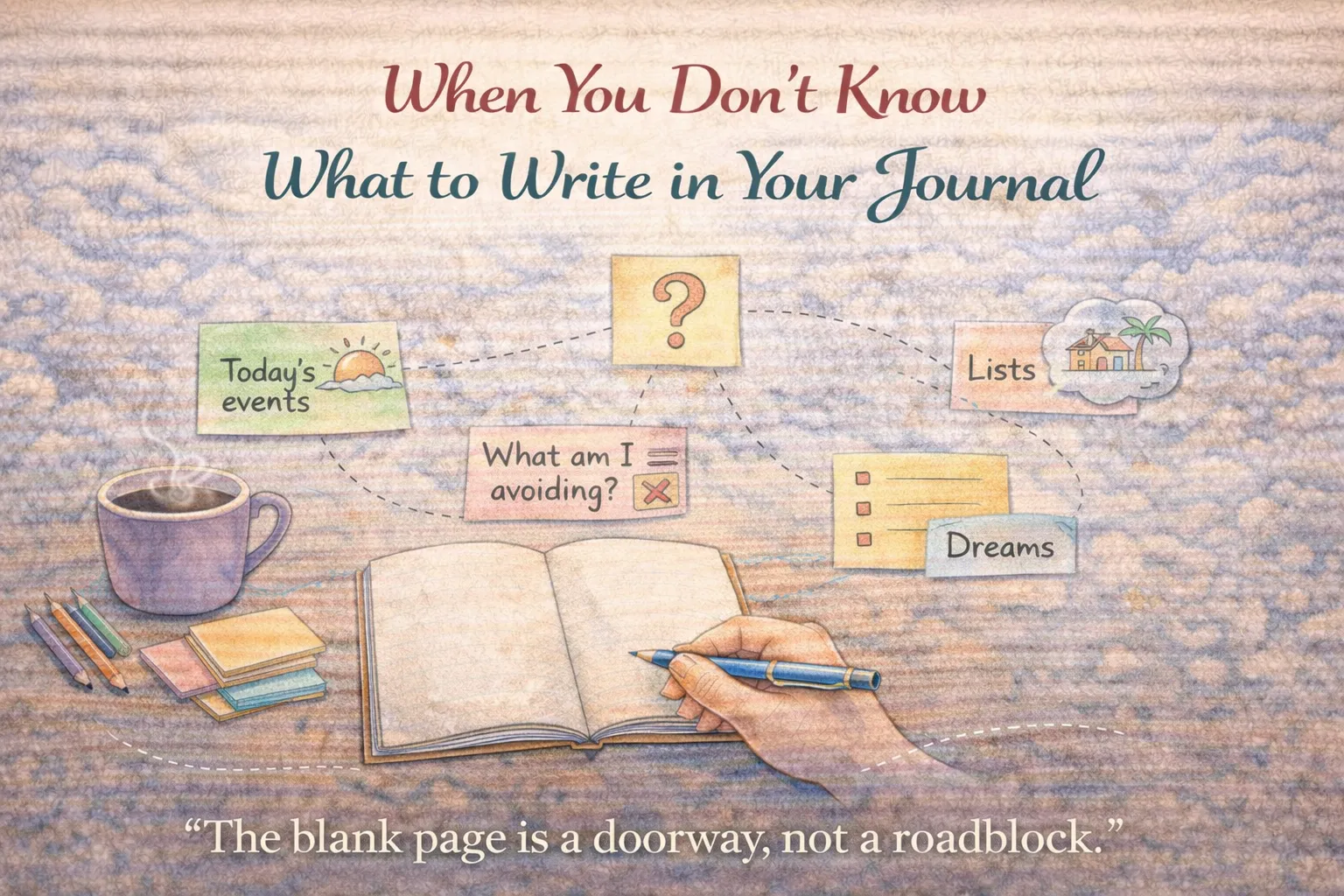
Start With What Happened Today
If you feel stuck, begin with something simple: write about your day.
What happened?
What stood out to you?
What felt good?
What frustrated you?
Even small details can open the door to deeper thoughts. A simple entry about your day often turns into reflection about your feelings, decisions, or goals.
Ask Yourself One Good Question
Questions are powerful journaling prompts because they invite curiosity instead of pressure.
Try questions like:
• What has been on my mind lately?
• What is causing me stress right now?
• What am I looking forward to this week?
• What is one thing I wish I understood better about myself?
You don’t need to answer perfectly. The act of exploring the question is what matters.
Write About What You’re Avoiding
Sometimes the best journaling topic is the one you keep pushing away.
Is there something bothering you that you haven’t wanted to think about?
A decision you’ve been putting off?
A conversation you’re nervous about having?
Your journal is a safe place to unpack these thoughts without judgment.
Often, simply writing about the situation makes it feel more manageable.
Make a List Instead
Journaling doesn’t always have to look like paragraphs.
If writing feels difficult, try making lists:
• Things that made you smile today
• Goals you want to work toward
• Ideas you’ve been thinking about
• Lessons you’ve learned recently
• Things you want to improve in your life
Lists can spark new insights and often lead naturally into longer reflections.
Use Your Journal to Dream
Your journal is not only for processing problems. It can also be a place to imagine possibilities.
Write about the future you want to create.
What would your ideal day look like?
What goals excite you the most right now?
What kind of life are you slowly building?
Dreaming on paper helps turn vague hopes into clearer direction.
The Blank Page Is Not the Enemy
A blank page can feel intimidating, but it’s actually an invitation.
It means you have space to think freely.
You don’t need perfect words, deep insights, or long entries. You just need honesty and a willingness to start.
Sometimes the most meaningful journal entries begin with a single sentence.
And once that first sentence appears, the rest usually follows.