
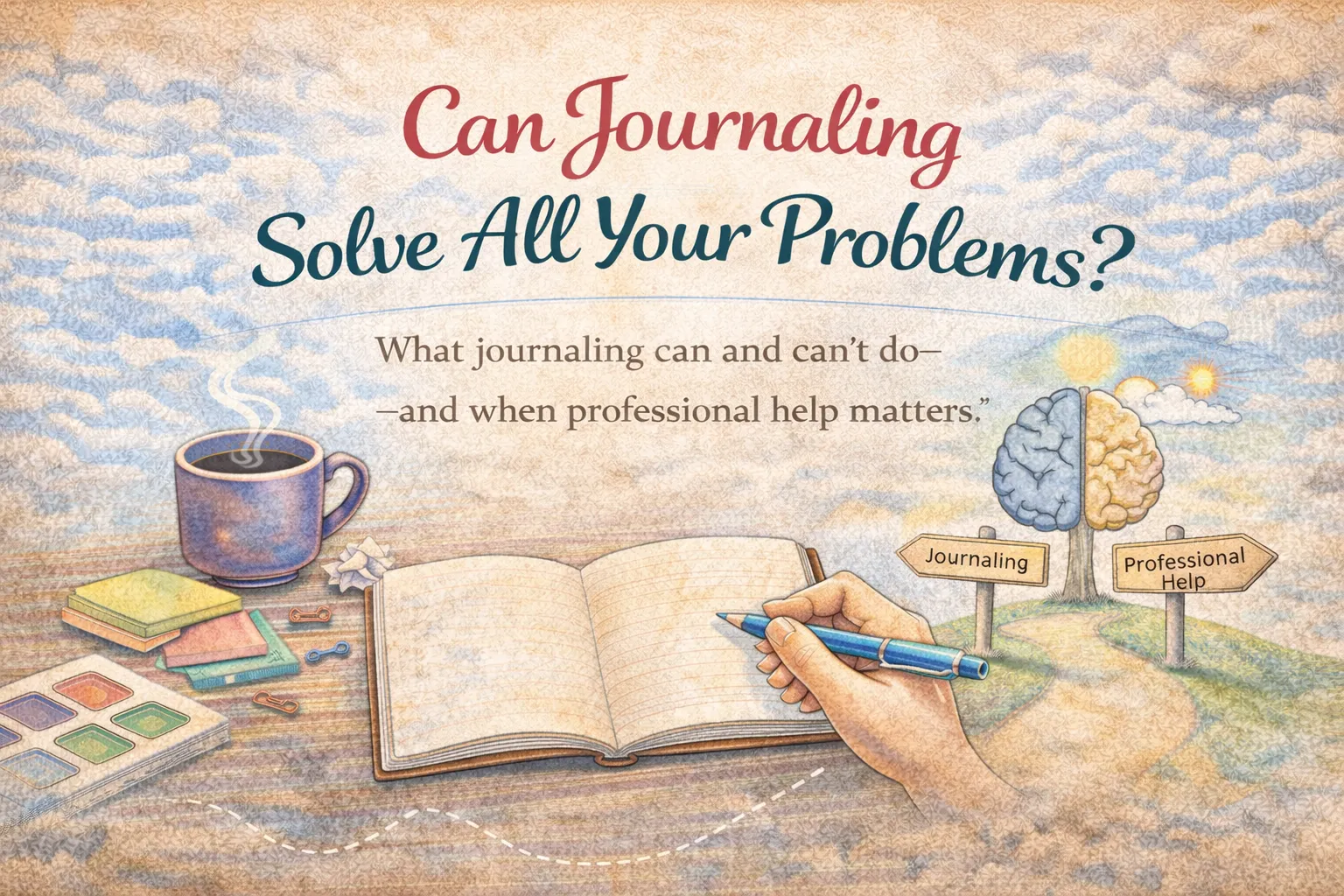
Can Journaling Solve All Your Problems?
Journaling comes up in a lot of conversations these days—and for good reason. More people are discovering its benefits, experimenting with different journaling styles, and building simple writing habits into their lives. With all that enthusiasm, it’s easy to assume journaling is a cure-all.
It isn’t. But it can help in meaningful, practical ways.
What Journaling Can Help With
Journaling doesn’t magically erase problems, but it can make them easier to understand and manage. Some of its most helpful benefits include:
Reducing stress and anxiety
Writing about what you’re feeling helps release emotional pressure. Putting thoughts on paper can clarify what’s actually causing stress or making anxiety feel heavier, which often brings a sense of relief.
Setting and working toward goals
Journaling creates space to define what you want, why it matters, and what steps feel realistic. Seeing your goals written out makes them feel more tangible—and easier to act on.
Finding clarity
When life feels confusing or stuck, journaling can help untangle your thoughts. Writing often reveals patterns, priorities, or feelings you didn’t realize were there.
Making big decisions
Whether you’re considering a new job, a move, or a major life change, journaling allows you to explore your thoughts honestly. Seeing pros, cons, fears, and hopes on the page can help guide you toward a decision that feels right for you.
Venting and releasing frustration
Sometimes you just need to unload—without explaining yourself or worrying about how it sounds. A journal is a safe place to vent freely and move forward without carrying everything inside.
What Journaling Can’t Replace
While journaling is a powerful support tool, it isn’t a substitute for professional care. It can complement therapy or medical treatment, but it shouldn’t replace them.
Many therapists encourage journaling alongside sessions. Writing can help track triggers, notice emotional shifts, or process thoughts between appointments. It’s also commonly used alongside medical care—for example, noting symptoms, stress patterns, or emotional changes related to health conditions.
If you’re dealing with physical or mental health challenges, professional support matters. Journaling can walk alongside that support, helping you stay aware and engaged in your own healing—but it shouldn’t be the only resource you rely on.
Journaling doesn’t solve everything. What it does offer is clarity, awareness, and a place to begin—and sometimes, that’s exactly what you need.