
Consistency is what turns journaling from a good idea into a meaningful practice. Writing regularly helps patterns emerge, insights deepen, and habits form. But consistency can be hard—especially when journaling feels optional compared to everything else life demands.
The goal isn’t perfection. It’s creating a rhythm that makes journaling easier to return to, even when motivation fades.
Make Journaling a Priority (for Now)
If you want journaling to stick, it needs a place in your life that isn’t constantly up for negotiation. Treat your journaling time as an appointment with yourself—one that only gets moved for real reasons like illness or emergencies.
This doesn’t mean journaling has to dominate your schedule forever. It just needs enough priority early on to become familiar and comfortable.
Set a Regular Schedule
Scheduling matters, especially when you’re building consistency. Choose specific days and times for journaling and keep them as steady as possible.
The exact time doesn’t matter—morning, afternoon, or evening all work. What matters is repetition. When you journal at the same times each week, your brain starts to expect it, making it easier to begin without resistance.
Write in the Same Place
While variety can be inspiring, consistency benefits from simplicity. Choose one place to journal while you’re building the habit—a desk, a favorite chair, a quiet corner.
Over time, that space becomes associated with writing. Sitting down there naturally signals your mind that it’s time to reflect.
Create a Simple Journaling Ritual
Our brains respond well to cues. Small routines tell us what’s coming next without requiring effort or decision-making.
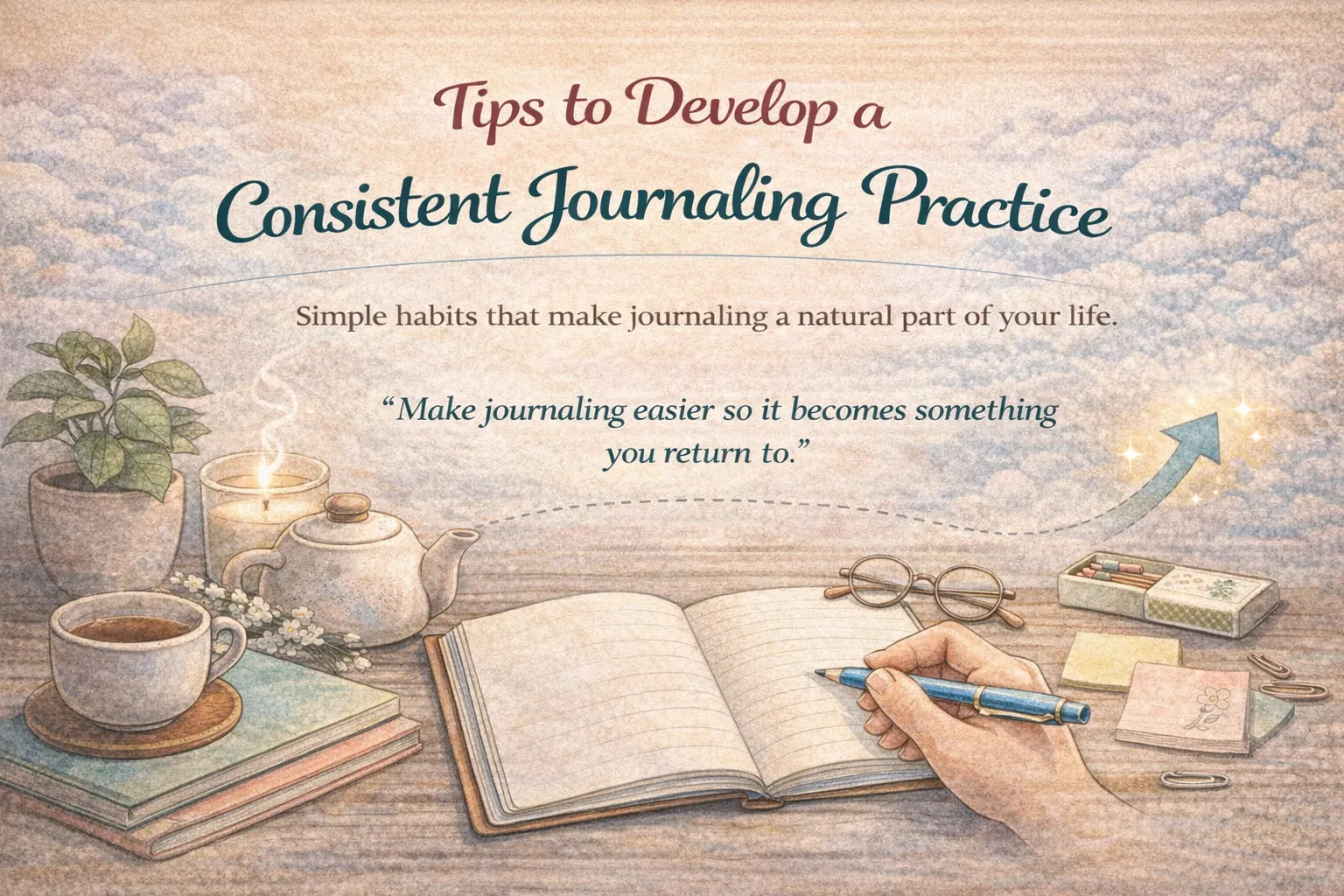
You can use this to support journaling. Pair your writing time with a few consistent actions—making tea, lighting a candle, playing soft music, or taking a deep breath before opening your journal. These signals gently guide your mind into journaling mode.
Consistency isn’t about forcing yourself to write every day. It’s about reducing friction so writing feels natural instead of demanding. When journaling fits into your life with intention and ease, it becomes something you return to—not something you avoid.