
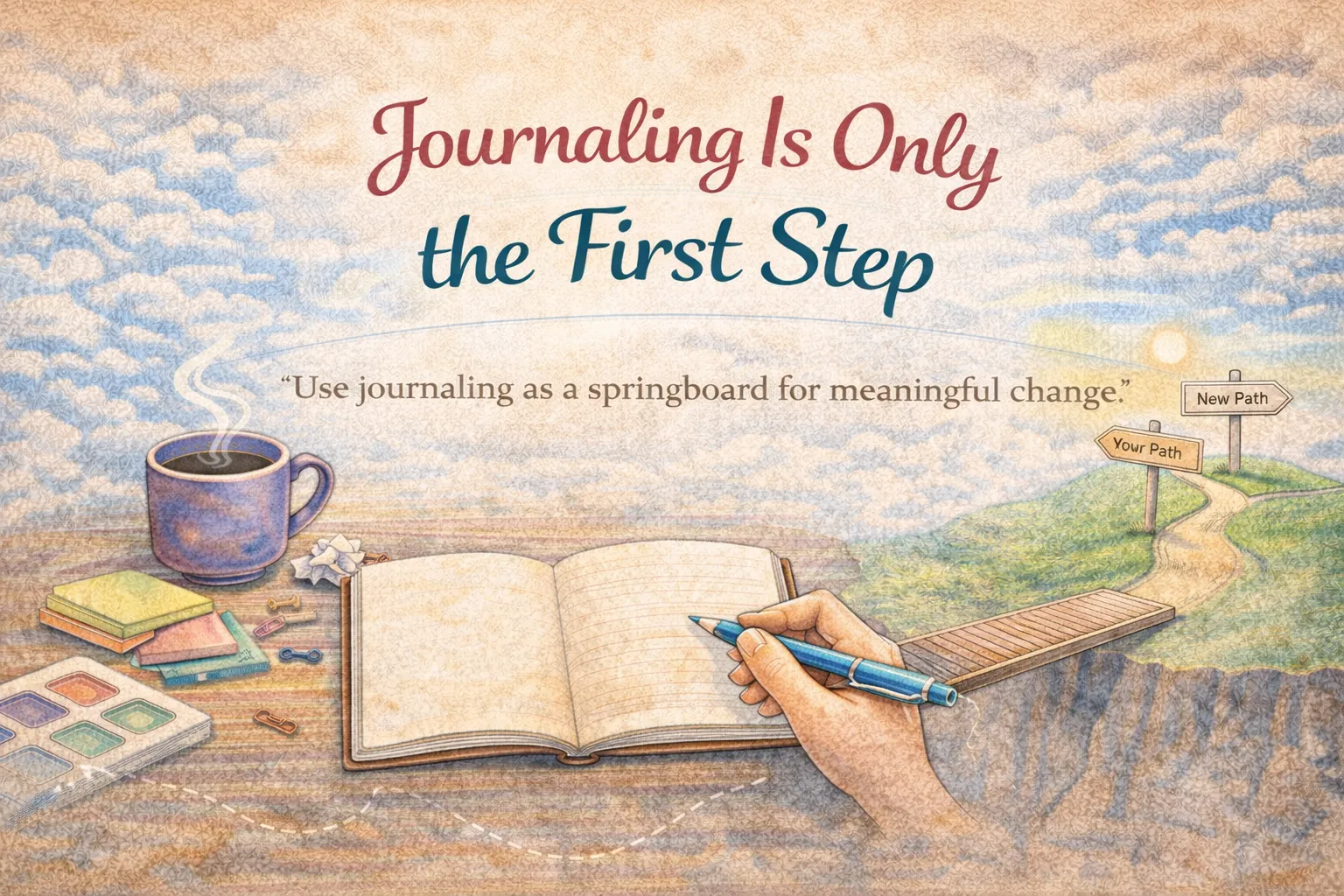
Journaling Is Only the First Step
Journaling is a powerful tool. Used consistently, it can change how you understand yourself, your patterns, and your life. But like any tool, its impact depends on what you do with it.
Journaling is an intermediary—it helps you get somewhere, but it doesn’t carry you the whole way. Think of it like a springboard. It gives you lift and momentum, but only if you actually jump. Standing on it without moving doesn’t take you anywhere.
The same is true with journaling. Writing can bring clarity, insight, and awareness, but staying on the page alone can keep you stuck if nothing follows. For some people, the work is internal—shifting perspective, building emotional awareness, reinforcing insights between journaling sessions. That work counts.
For others, journaling uncovers a desire for outward change. In those cases, journaling becomes the first step, not the destination. The steps that follow are actions—small, thoughtful ones that move your life in a new direction.
Those actions shouldn’t be rushed. Insight can feel urgent, but meaningful change works best when it’s intentional. After journaling reveals something important, the next step is clarity: understanding what needs to change and why. Then comes choice—deciding what kind of change makes sense. From there, you create a plan and follow it at a pace you can sustain.
For example, journaling might help you realize you’re deeply unhappy in your current job. That doesn’t mean you quit tomorrow. It means you start asking better questions. What exactly isn’t working? What do you want more of? What kind of work would support that?
From there, you research possibilities. You explore paths. You learn what skills or steps are required. Then you create a plan—and take action when you’re ready.
Journaling opens the door. What happens next is up to you.