
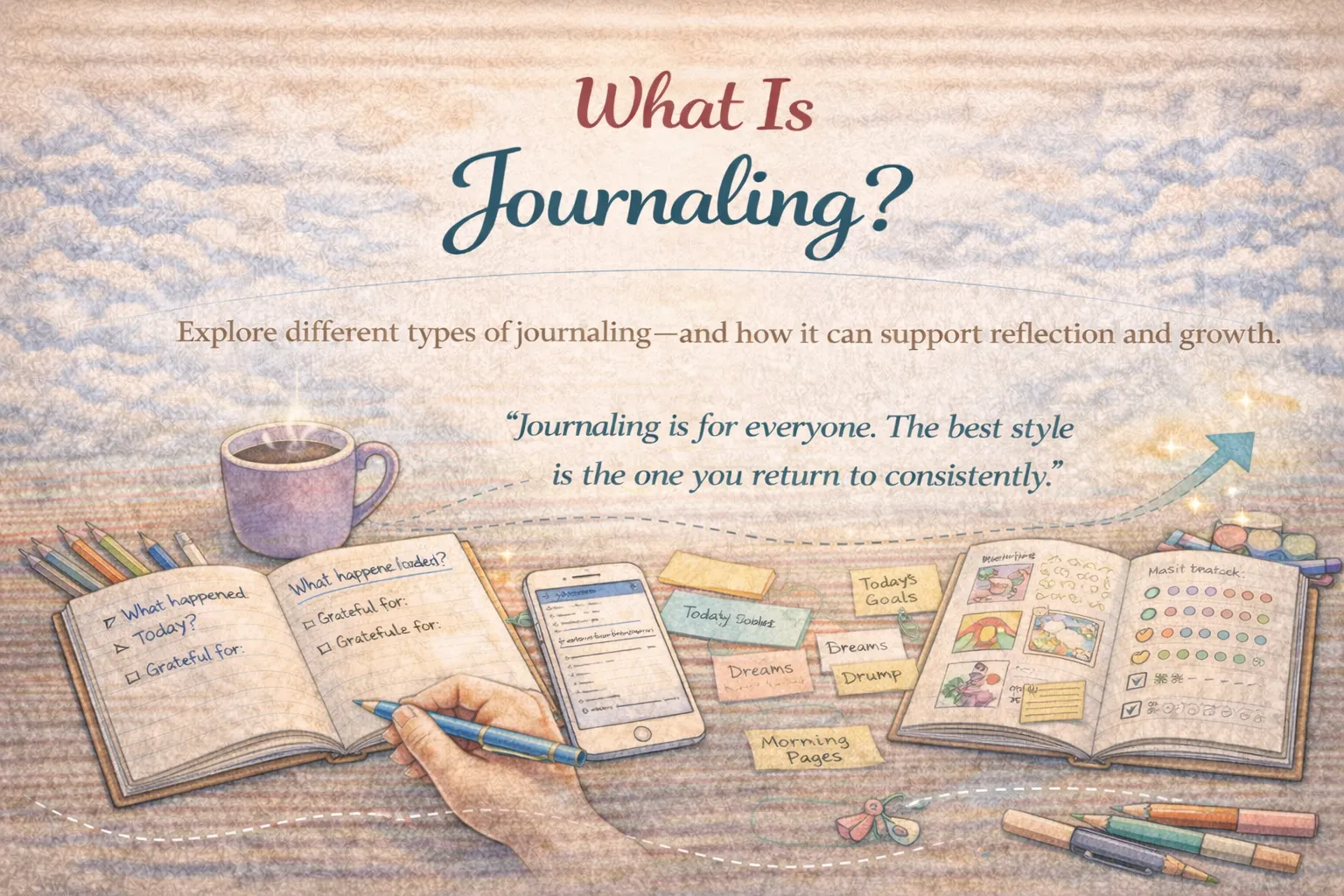
Journaling is the practice of regularly recording your thoughts, experiences, and inner world. It can be done on paper, on a computer, or on your phone—whatever format fits your life. While journaling often involves writing, it can also include art, lists, or reflection. The most important part isn’t how you journal, but making it a habit you return to consistently.
Journaling is for everyone. You don’t need to be a writer, creative, or “good with words.” There’s no single correct way to do it, and there are many styles to choose from depending on what you need in a given season of life.
Here are some of the most common and helpful types of journaling:
Daily Journaling
Writing about what happened during your day, how you felt, and anything that’s lingering in your mind. This is often the most familiar form of journaling.
Gratitude Journaling
Focusing on what you’re thankful for—big or small. This style helps shift attention away from stress and toward appreciation and perspective.
Dream Journaling
Recording what you remember from your dreams. Over time, patterns or recurring themes may emerge that invite deeper reflection.
Talk-It-Out or Worst-Case Scenario Journaling
Using your journal to work through worries and fears. You might explore what you’re afraid of, how likely it is, what you can control, and what you can let go of.
Goal-Setting Journaling
Writing down goals, breaking them into steps, and tracking progress. This style blends reflection with forward momentum.
Letter Journaling
Writing letters you don’t intend to send—to yourself or others. This can be a powerful way to process emotions, offer forgiveness, or gain closure.
One-Line Journaling
Writing just one sentence a day. It might summarize your day or capture one meaningful moment. Simple, sustainable, and surprisingly impactful.
Brain Dumping
Writing everything that’s in your head without filtering, editing, or organizing. This is especially helpful when you feel overwhelmed or mentally cluttered.
Reflection Journaling
Looking back on your day, experiences, relationships, work, or emotions and reflecting on what they meant to you.
List or Bullet Journaling
Using lists to organize thoughts, ideas, habits, or interests. This can include anything from to-do lists to personal insights.
Art Journaling
Expressing thoughts and emotions visually through drawing, painting, doodling, collages, or mixed media.
Free Writing
Setting a timer—often 10 to 20 minutes—and writing continuously without stopping or editing. This helps access deeper thoughts and ideas.
Morning Pages
Writing first thing in the morning to clear your mind and set the tone for the day. This practice encourages clarity, focus, and intentional starts.
Journaling doesn’t need rules or perfection. It’s a flexible practice that adapts to your needs, your personality, and your life. The best journaling style is simply the one you’ll keep coming back to.